
 CONTACT 13585206025
 2024/1/17
 admin
admin【Introduction】:
The solar cell quantum efficiency measurement system is an advanced photovoltaic device test instrument, specifically designed to evaluate and analyze the external quantum efficiency (EQE) of the solar cell. This system can accurately and quickly obtain the monochromatically incident photon-to-current efficiency (IPCE) and the spectral response of the solar cell. The data not only provide an intuitive indicator of photovoltaic device performance, but also an indispensable tool for researchers to conduct scientific exploration and innovation.
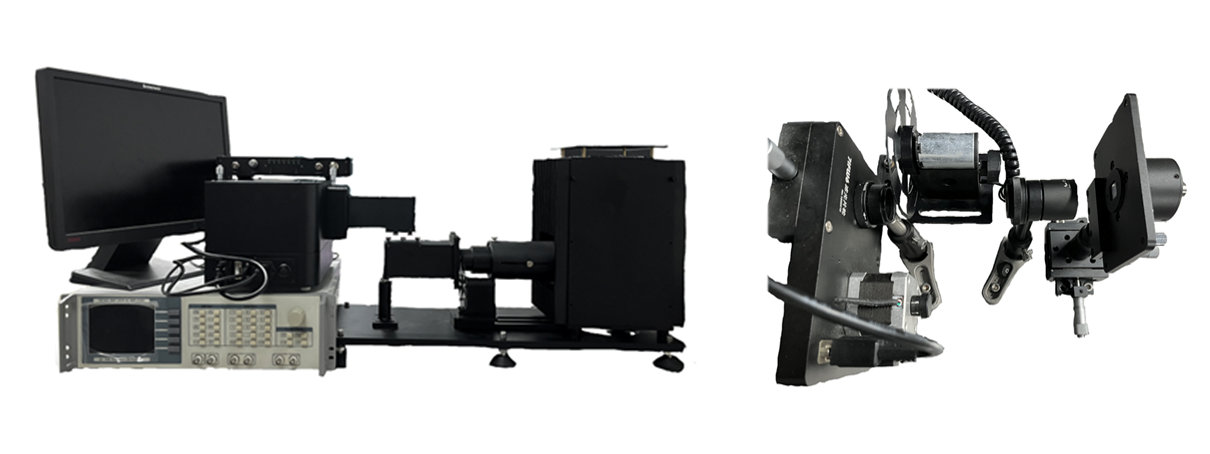
Quantum efficiency measurement system for solar cells
【Advantages】:
This system runs stably and can obtain real-time data such as IPC integrated current, etc. The full spectrum measurement range is 200~1100 nm, which can be extended to the widest range of 200~2000 nm. It has high monochromatic light intensity per unit, providing higher signal-to-noise ratio. It also has high stability and repeatability, with a repeatability of no less than 99% and a maximum of 99.5% for multiple measurement results.

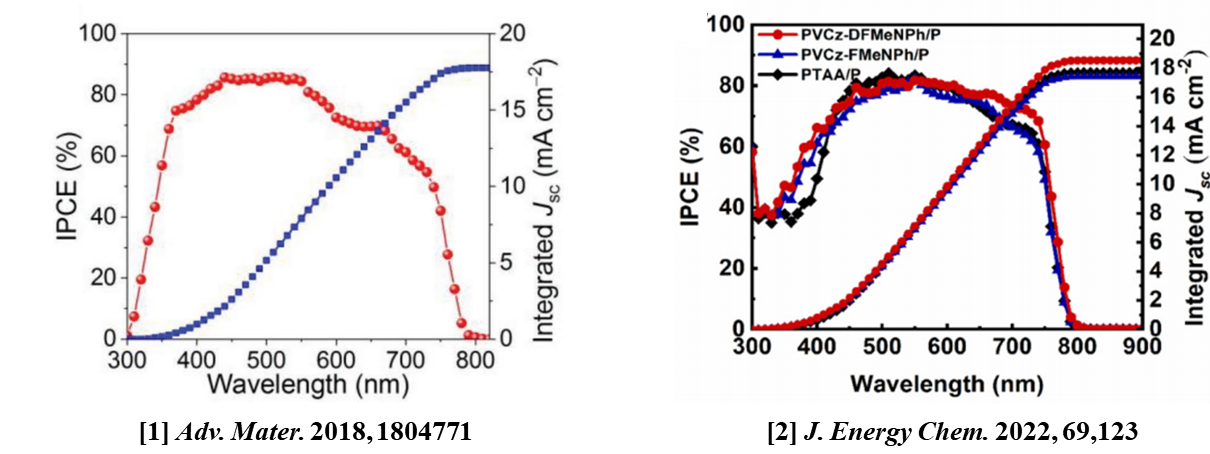
Schematic representation of test results
【Equipment specifications】:
Spectral range: 200~1100 nm
Spectral resolution: 0.5 nm
Maximum current gain: 10^7
Chopper frequency range: 1-3 kHz
Minimum sensitivity: 1 nA
Monochromatic light unit intensity: ≥ 5 mW/cm^2
Repeatability: ≥ 99%
Minimum area of device under test: 2 mm^2

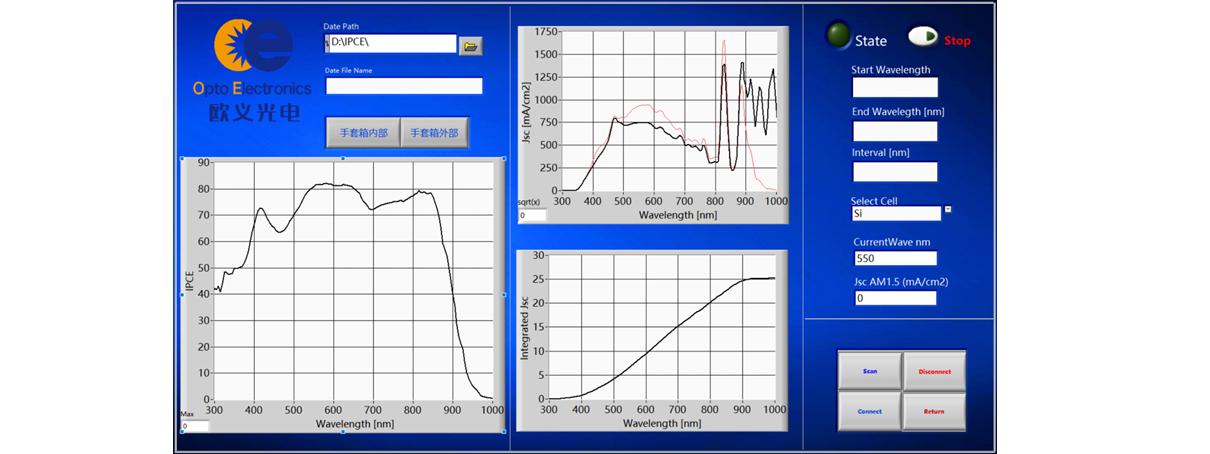
Schematic of the software's user interface
【Product applications】:
【1】Adv. Mater. 2018, 30, 1804771.
【2】J. Energy Chem.2022, 69, 123-131.
【3】J. Energy Chem.2022, 66, 205-209.
