
 CONTACT 13585206025
 2024/1/17 19:13:06
 admin
admin【Introduction】:
In situ fluorescence spectroscopy is an advanced characterization technique. It facilitates the examination of the photoluminescence fluorescence (PL) characteristics of samples in real-time scenarios, thereby allowing for the acquisition of intricate, time-resolved datasets. he key of this techinique is its high temporal resolution, enabling the capture of diverse absorption spectra to not only identify the final state but also illuminate the sample's optical behavior throughout the response process. For example, during the spin-coating process of a thin film, this technique can reveal the dynamic process of film crystallization during the transition from solution to solid state. The change in fluorescence wavelength may correspond to the luminescence from different substances during the crystallization process, and the change in fluorescence intensity may correspond to the increase or decrease of film defects during the crystallization.
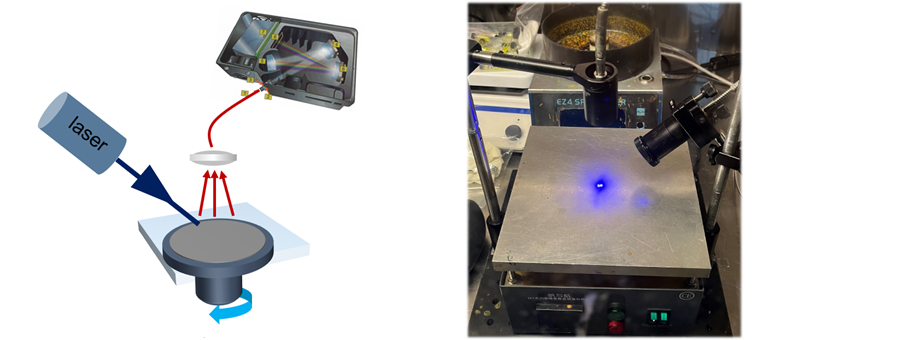
In situ fluorescence spectroscopy system
【Advantages】:
This system has a time resolution of up to 0.01 seconds. It can be combined with different sample preparation equipment such as spin coater and slot die coater.
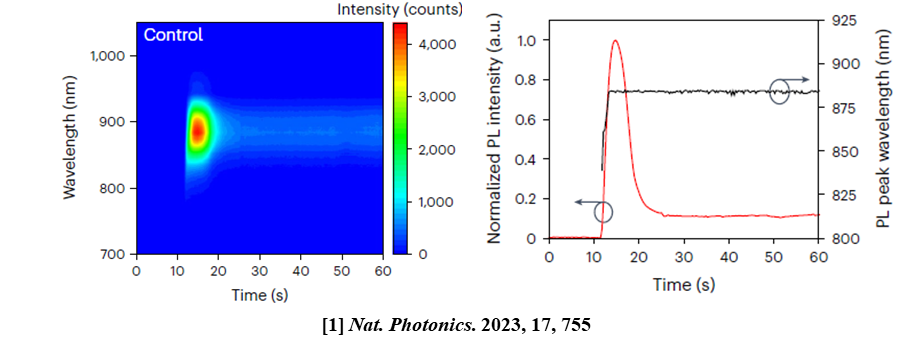
Schematic representation of test results
【Equipment specifications】:
Detectable spectral range: 185-1100 nm
Spectral resolution: 0.14-7.7 nm
FWHM: depends on the size of the grating and inlet aperture
Integration time: 8 ms -60 min
Dynamic range: 85000:1 (typical value)
Stray light:<0.08% at 600 nm; 0.4% at 435 nm
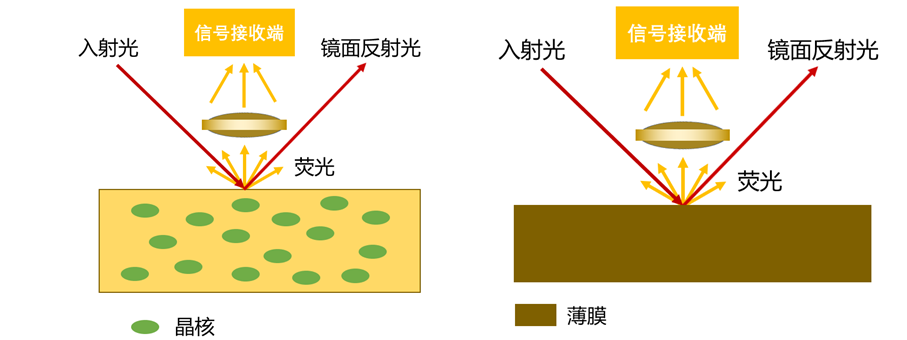

Schematic diagram of solution/film testing
【Product applications】:
【1】Nat. Photonics. 2023, 17, 755
